

In 1973, Led Zeppelin were on top of the world, they broke concert attendance records (including a record held by the Beatles), and a quarter of Atlantic Records' revenue in the US came from the band alone. They made a lot of money, but they also made a lot of noise, a lot of drugs, and a lot of chaos. They, and especially drummer John Bonham, destroyed hotel rooms and destroyed cars. The rumors and stories of the female fans got out of control, as did Jimmy Page's fondness for black magic and the plots of the mystic and magician Aleister Crowley. There were those who really didn't like the famous guitarist's involvement in the subject, and the news that he had purchased Crowley's estate, which was known "for" the magical rituals that took place there. It didn't help. Death threats began to haunt Page, who was simply curious. The one who suffered especially from all the chaos was bassist John Paul Jones, who was on the verge of a nervous breakdown. Rumors began to spread to emerge that he wanted to leave the band. What helped the rumors was his participation in several sessions for other artists.
One thing was clear to everyone, Zeppelin needed a break. What they usually did during a break from touring was record an album, but this time that wasn't an option either. So Page and Plant focused on setting up an independent record label like everyone around them (the Beatles, the Stones, and even Deep Purple) did. The main goal was to achieve artistic freedom and, of course, control over the revenue. Thus was born Swan Song Records, named after the metaphor "swan song," an artist's last work. The company's logo became, over the years, the iconic logo of Zeppelin - the image of the god of music, poetry, and literature, the Greek Apollo, muscular with wings, seemingly groaning in pain, falling from the sky.
But the thorns in Page's hands wouldn't let him take a step back and rest, now that he had a label he wanted the first album under the label to be by Zeppelin. In November 1973, Zeppelin again booked the Hadley estate to record an album there just as they had created the previous three albums. A portable recording studio was again rented and everyone showed up at the estate. Everyone except John Paul Jones. He had no plans to leave the band, but neither did his family. He demanded more rest. Page and Bonham first used the time to lay the foundations for Kashmir, the album's seminal piece, and Plant polished the lyrics he had written inspired by his and Page's trip to Morocco. But the group quickly found themselves without their multi-instrumentalist. Paul Jones showed up at the end. On his own time and on his own terms, he created the masterful orchestral arrangement of Kashmir as well as the wonderful opening to In the Light.
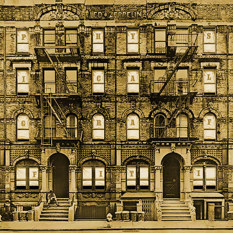
Zeppelin was proof that the whole was greater than the sum of its parts, and only when Paul Jones stabilized did things get moving again. Eight long, complex songs were formed. Too long, but also too perfect to touch and shorten. The band was in trouble; there was no room on one record for all the songs. So instead of shortening them, a double album was decided upon, but instead of writing more songs, it was decided to open the archives and pull out songs that had been shelved from previous albums. Physical Graffiti was released on February 24, 1975, to the applause of critics and the audience. Critics praised the album as a masterpiece that showed Zeppelin's versatility. The audience rushed to stores to buy the album, which shot to number one on the sales charts on the first day it was released in the UK. It also reached number one in the US over time, and it entered the Top 10 worldwide. With it, all the band's other albums also returned to the sales charts, and Zeppelin became the first band with six albums on the sales charts.
But over time, the album, which also included a summary of life so far in the form of the personal song Ten Years Gone, marked the beginning of the decline. The band's swan song, although not the last album, but perhaps the last to touch the sky. Incidentally, it is possible that if the band had chosen to keep it a single album and give up one of the eight original songs, it would have been remembered in the mind as an even greater album. These eight songs were also its best, and some of the additions were compromises that were initially rejected from other albums because they were not good enough. But these are already questions of what would have happened if we had left it to magicians like Aleister Crowley. To mark the 50th anniversary of the album, Tomer Moloidzon continued the series of specials about Led Zeppelin and devoted 3 hours to Led Zeppelin's only double studio album.